
Your Garage Door Springs Are Working Harder Than You Think
Every time you open and close your garage door, the springs do the heavy lifting — literally. A standard residential garage door weighs between 130 and 350 pounds, and the springs are responsible for counterbalancing all of that weight. Without them, your garage door opener couldn't move the door on its own, and manually lifting it would be nearly impossible.
Most homeowners in Oceanside use their garage doors multiple times a day without giving the springs a second thought. But like any mechanical component, springs have a finite lifespan. Knowing when they're starting to fail can help you avoid the inconvenience — and potential danger — of a sudden break.
The Two Types of Garage Door Springs
Before diving into the warning signs, it helps to understand which type of springs your garage door uses:
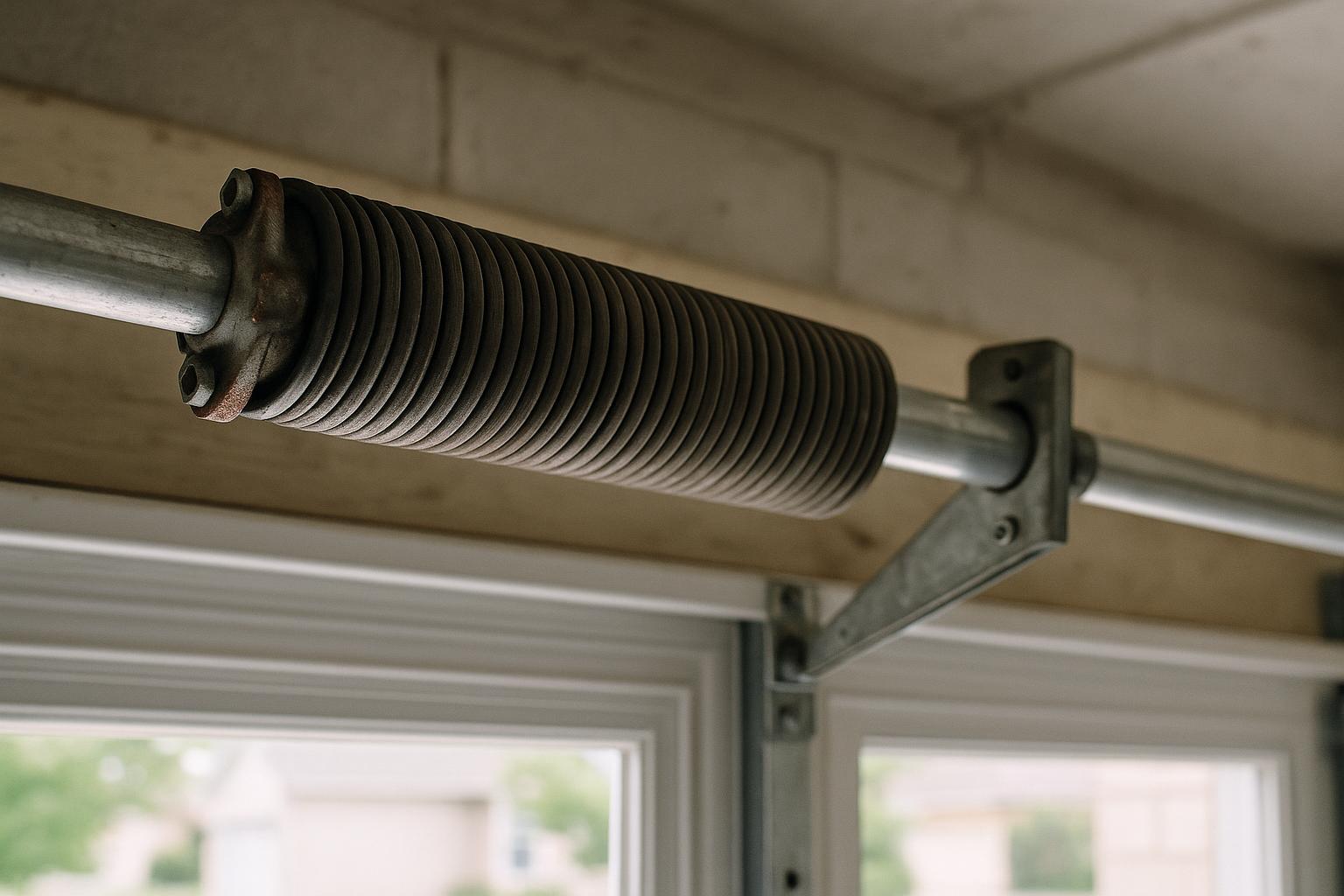
- Torsion springs are mounted horizontally above the garage door opening. They twist and unwind to raise and lower the door. These are the most common type found in modern residential installations.
- Extension springs run along the horizontal tracks on either side of the door. They stretch and contract as the door moves. These are more common on older or lighter doors.
Both types are under extreme tension, which is why spring replacement should always be handled by a trained professional. A spring that snaps unexpectedly can cause serious injury or damage to your vehicle and property.
Warning Signs Your Garage Door Springs Are Failing
1. The Door Feels Heavier Than Usual
Try this simple test: disconnect your garage door opener by pulling the emergency release cord, then manually lift the door about halfway. A properly balanced door should stay in place on its own. If it feels unusually heavy, slides back down, or is difficult to lift, your springs are likely losing tension and nearing the end of their life.
2. The Door Opens Unevenly or Crooked
If one side of your garage door rises faster than the other, it could mean one of your springs is weaker than its counterpart. This is especially common with extension spring systems where each side operates somewhat independently. An uneven door puts extra stress on the tracks, rollers, and opener, which can lead to additional repair costs down the road.
3. You Hear a Loud Bang From the Garage
If you heard a loud bang coming from your garage — almost like a firecracker — and nothing looks out of place at first glance, check your springs. A torsion spring that snaps will unwind rapidly and produce a startling noise. You'll usually see a visible gap in the coil where the break occurred. If this has happened, do not attempt to operate the door. Call a professional immediately.
4. There Are Visible Gaps in the Spring Coils
A healthy torsion spring has tightly wound coils with no separation. If you look up at your spring and notice a gap — even a small one — the spring has already broken. Operating the door in this condition is dangerous and can cause the cables to come loose or the door to fall unexpectedly.
5. The Opener Struggles or Stops Mid-Cycle
Your garage door opener is designed to work in partnership with the springs. When springs weaken, the opener has to compensate by working harder. You might notice the motor straining, the door moving more slowly, or the opener stopping partway through the cycle. Continuing to use the opener under these conditions can burn out the motor prematurely.
6. The Door Closes Too Fast
Springs control the speed at which your door closes. When they lose tension or break, the door may slam shut much faster than normal. This is a serious safety concern, especially in homes with children or pets. If your door is dropping quickly rather than lowering in a smooth, controlled motion, have your springs inspected right away.
7. Rust or Corrosion on the Springs
Living near the coast in Oceanside means your garage door hardware is exposed to salt air and moisture, which accelerates rust and corrosion. Rusty springs have increased friction and are more prone to snapping. If you notice rust building up on your springs, it's worth having a technician evaluate their condition and apply lubrication to extend their remaining life.
How Long Do Garage Door Springs Last?
Most standard garage door springs are rated for approximately 10,000 cycles, with one cycle being a single open-and-close. If your household opens and closes the garage door four times a day, that works out to roughly seven years of use. High-cycle springs rated for 25,000 or even 50,000 cycles are available and can be a smart investment, particularly if your garage door is your primary entry point.
Factors that can shorten spring life include:
- Lack of regular lubrication and maintenance
- Exposure to coastal humidity and salt air
- Extreme temperature fluctuations
- An improperly balanced door
Why You Shouldn't Replace Garage Door Springs Yourself
We understand the DIY impulse — there are plenty of tutorials online that make spring replacement look straightforward. But garage door springs store an enormous amount of energy. Torsion springs, in particular, require specialized tools called winding bars and precise knowledge of how many turns to apply based on the door's weight and dimensions.
Every year, emergency rooms across the country treat injuries caused by DIY spring replacement attempts. The risk simply isn't worth it. A professional technician can complete the job safely in about an hour, and you'll have the peace of mind that comes with knowing the springs are properly calibrated and the door is balanced correctly.
The Value of Preventive Maintenance
One of the best ways to extend the life of your garage door springs — and catch problems before they turn into emergencies — is regular preventive maintenance. A professional tune-up typically includes:
- Inspecting springs, cables, rollers, and hinges for wear
- Lubricating all moving parts
- Testing the door's balance and adjusting spring tension if needed
- Checking the opener's safety features
- Tightening loose hardware
We recommend scheduling maintenance at least once a year. For homes in Oceanside and nearby coastal communities like Carlsbad, Vista, and Encinitas, twice-yearly service can be beneficial due to the added wear from salt air exposure.
Don't Wait for a Spring to Snap
A broken garage door spring always seems to happen at the worst possible time — when you're running late for work, loading up for a weekend trip, or trying to get the kids to school. By paying attention to the warning signs and scheduling timely repairs, you can avoid being stuck with a garage door that won't budge.
If you've noticed any of the symptoms described above, or if it's simply been a while since your springs were inspected, Oceanside Overhead Door Co is here to help. We provide fast, honest spring replacement and maintenance services throughout Oceanside, San Marcos, Escondido, and the surrounding area. Give us a call, and we'll make sure your garage door is safe, balanced, and ready to perform.