
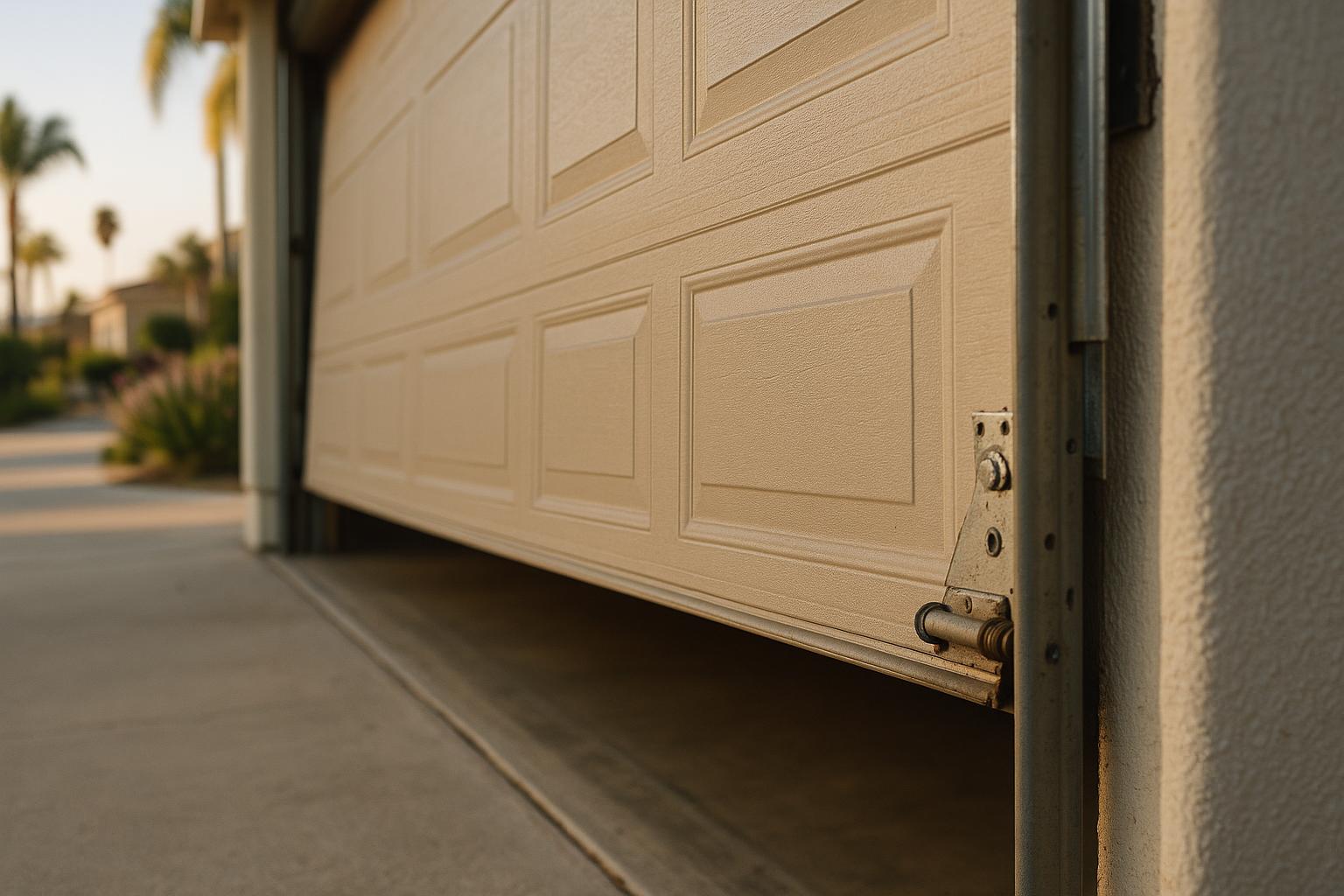
Your Garage Door Shouldn't Sound Like That
You press the button on your garage door opener and brace yourself. Instead of a smooth, quiet operation, you hear grinding, squealing, popping, or rattling that makes the neighbors look over. If this sounds familiar, you're not alone. Noisy garage doors are one of the most common complaints we hear from homeowners in Oceanside, and the good news is that most of those sounds point to identifiable — and fixable — problems.
The bad news? Ignoring them usually makes things worse. A noise that starts as a minor annoyance can quickly become a costly repair or even a safety hazard. Let's break down the most common garage door noises, what causes them, and what you should do about each one.
Squealing or Screeching
A high-pitched squeal or screech when your garage door opens or closes is one of the most cringe-worthy sounds a homeowner can hear. It typically points to one of two issues:
- Lack of lubrication: Metal parts moving against each other without proper lubrication create friction, which produces that awful squealing sound. Rollers, hinges, and the track itself all need periodic lubrication to operate smoothly.
- Worn-out rollers: If your garage door uses metal rollers (as opposed to nylon), they can wear down over time and begin to scrape against the track. Even nylon rollers eventually degrade, especially in coastal areas like Oceanside where salt air accelerates wear on moving parts.
What to do: Start by applying a silicone-based garage door lubricant to the rollers, hinges, and tracks. If the noise persists, the rollers may need to be replaced entirely. This is a relatively affordable fix that can dramatically extend the life of your door.
Grinding or Scraping
A grinding noise usually means something is rubbing where it shouldn't be. Common causes include:
- Misaligned tracks: Over time, the metal tracks that guide your garage door can shift out of alignment. When the door moves through a section where the track is bent or off-center, it creates a grinding or scraping sound.
- Debris in the tracks: Small rocks, leaves, dirt, or even dried salt residue — something we see frequently in homes near the coast — can accumulate in the tracks and interfere with smooth operation.
- Worn gear in the opener: If the grinding sound seems to come from the motor unit on the ceiling rather than the door itself, the drive gear inside your garage door opener may be stripped or wearing out.
What to do: Visually inspect the tracks for obvious bends, gaps, or debris. Clean them with a damp cloth. If the tracks appear misaligned or the sound is coming from the opener, it's best to call a professional. Attempting to realign tracks or repair opener gears without the right tools can create bigger problems.
Rattling or Vibrating
A rattling sound is often less alarming than grinding or squealing, but it still deserves attention. Rattling typically means something is loose:
- Loose hardware: Your garage door has dozens of nuts, bolts, and screws that hold everything together. Over hundreds of open-and-close cycles, these fasteners can loosen and create a rattling vibration.
- Loose chain or belt: If you have a chain-drive or belt-drive opener, the chain or belt can loosen over time and slap against the rail, producing a rattling or vibrating noise.
- Unsecured opener: Sometimes the opener unit itself vibrates against the ceiling or the mounting bracket, especially if it wasn't installed with vibration-dampening pads.
What to do: Grab a socket wrench and tighten all visible nuts and bolts on the door's hinges, brackets, and track mounts. Check the chain tension on your opener if applicable. If the rattling continues, a technician can identify the specific source and secure it properly.
Loud Banging or Popping
A sudden bang or pop is the noise that gets your heart racing — and for good reason. This sound often signals a more serious issue:
- Torsion spring problems: A loud bang that seems to come from above the door could indicate a torsion spring issue. While we've covered spring replacement in a previous post, it's worth noting that a popping sound during operation can mean a spring is under uneven tension or nearing failure.
- Panel or section issues: If a panel is cracked, warped, or coming loose from the frame, it can pop or bang as the door moves through its cycle.
- Track obstructions: A roller jumping out of the track and snapping back in can produce a startling bang.
What to do: Stop using the door immediately if you hear a loud bang and can't identify the source. Banging noises can indicate components under extreme tension, which pose a serious safety risk. Call a garage door professional to inspect the system before operating it again.
Humming Without Movement
If you press your remote and hear the opener hum or buzz but the door doesn't move, the motor is running but can't engage the door. This could mean:
- The disconnect switch is engaged: Most openers have a manual release cord. If it's been pulled — sometimes accidentally — the opener will run without moving the door.
- A stripped gear or broken drive: The internal gears that transfer motor power to the drive mechanism may be stripped, especially in older units.
- The door is stuck or locked: A manual lock in the locked position, or a door that's frozen in its tracks due to rust or debris, can prevent movement while the motor runs.
What to do: Check the manual release cord first. If that's not the issue, disconnect the opener and try lifting the door manually. If the door won't budge, something is binding it. If the door moves freely but the opener still hums without engaging, the opener likely needs internal repair or replacement.
Why Coastal Living Matters for Garage Door Maintenance
Living in Oceanside and the surrounding coastal communities comes with plenty of perks, but the salt air and marine moisture take a toll on garage door components. Metal parts corrode faster, lubricants break down more quickly, and weather seals degrade sooner than they would further inland. Homeowners in Carlsbad, Encinitas, and other nearby beach towns often notice their garage doors getting noisier sooner than expected. Regular preventive maintenance — ideally twice a year — can counteract these effects and keep your door operating quietly for years.
When to Call a Professional
Some garage door noises have simple DIY solutions like lubrication or tightening a few bolts. But many require professional diagnosis and repair, especially when springs, tracks, or opener motors are involved. These components are under significant tension or electrical load, and working on them without proper training can lead to injury or further damage.
At Oceanside Overhead Door Co, we help homeowners throughout Oceanside, Vista, San Marcos, and Escondido identify and fix noisy garage doors every day. Whether it's a quick tune-up or a more involved repair, we show up on time and get your door running the way it should — quietly.
If your garage door has started making a sound that wasn't there before, don't wait for it to get worse. Contact us today to schedule an inspection and get your peace and quiet back.