
That Frustrating Moment When Your Garage Door Won't Stay Closed
You press the button on your remote, watch your garage door glide downward, and then — just inches from the ground — it stops and reverses back up. You try again. Same thing. Maybe it works on the third attempt, maybe it doesn't. Either way, you're left standing in your driveway wondering what's going on.
This is one of the most common garage door complaints we hear from homeowners in Oceanside, and the good news is that it's almost always fixable. The bad news? Ignoring it can leave your garage — and everything inside it — exposed to theft, weather, and pests.
Let's walk through the most likely reasons your garage door reverses before reaching the floor and what you can do about each one.
Understanding Your Garage Door's Safety System
Before we get into specific causes, it helps to understand why your garage door is designed to reverse in the first place. Since 1993, all garage door openers sold in the United States have been required to include two safety reversal systems:
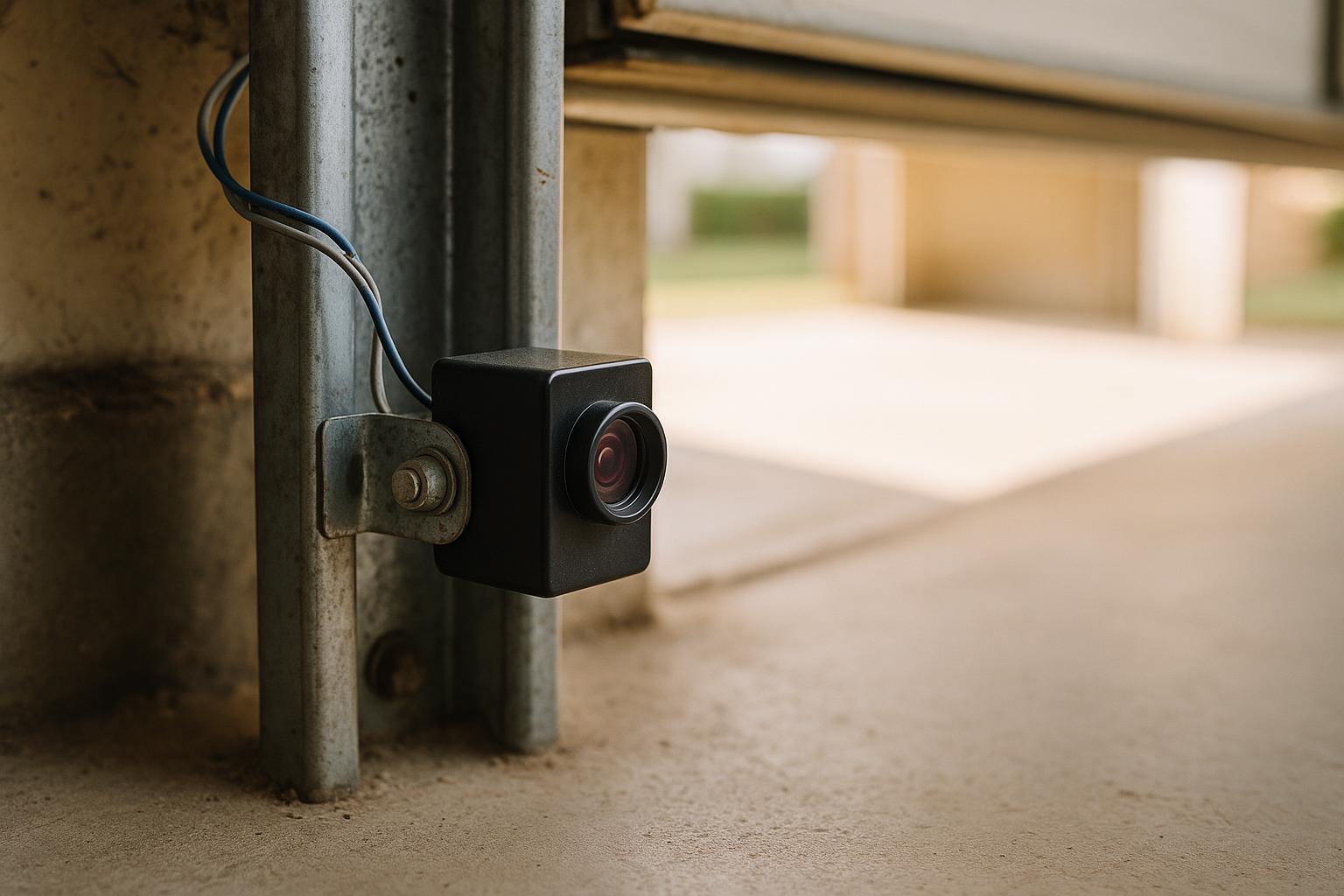
- Photo-eye sensors: Two small sensors mounted near the bottom of your garage door tracks that project an invisible beam across the opening. If something breaks that beam, the door reverses.
- Auto-reverse mechanism: If the door encounters physical resistance while closing — like hitting an object or the ground too hard — it automatically reverses direction.
Both systems exist to prevent injuries and property damage. When your door reverses unexpectedly, one of these systems is usually being triggered — sometimes for a legitimate reason, sometimes due to a malfunction.
Cause #1: Misaligned Photo-Eye Sensors
This is the number one reason garage doors reverse prematurely, and it's often the easiest to fix. Your photo-eye sensors need to be perfectly aligned with each other to maintain a clear beam. Over time, they can get bumped, shifted by vibration, or knocked out of alignment by a stray bicycle or trash can.
How to check
Look at the small LED lights on each sensor. Most models show a steady green light when properly aligned and a blinking or red light when something is off. If one sensor is blinking, try gently adjusting its angle until the light becomes steady.
Other sensor issues
- Dirty lenses: Dust, cobwebs, and salt air — something we deal with regularly here along the Oceanside coast — can cloud the sensor lenses. Wipe them down with a soft cloth.
- Sun interference: Direct afternoon sunlight can overwhelm the sensor's infrared beam. If the problem only happens at certain times of day, this could be the culprit. Sensor shades or repositioning can help.
- Damaged wiring: The thin wires connecting sensors to the opener can fray, get chewed by rodents, or corrode over time.
Cause #2: Incorrect Close-Force or Travel-Limit Settings
Your garage door opener has adjustable settings that control how far the door travels and how much force it uses to close. If the travel limit is set too short, the opener thinks the door has hit an obstruction before it actually reaches the floor. If the close force is set too low, even minor friction causes the door to reverse.
How to adjust
Most openers have small adjustment screws or dials on the back or side of the motor unit, typically labeled "limit" and "force." Your owner's manual will have specific instructions. Small adjustments — a quarter turn at a time — are usually all that's needed. If you're not comfortable making these changes yourself, a professional adjustment takes just a few minutes.
Cause #3: Worn or Damaged Tracks
Your garage door rides along metal tracks on both sides. If those tracks are bent, dented, or have accumulated debris, the door can bind or stick as it closes. The opener interprets that resistance as an obstruction and reverses.
Inspect your tracks visually for obvious bends or gaps. Check for small rocks, leaves, or hardened grease buildup that might be causing friction. Minor debris can be cleared with a rag, but bent tracks should be handled by a professional to avoid making the problem worse.
Cause #4: Broken or Worn Springs
Your garage door springs do the heavy lifting — literally. They counterbalance the weight of the door so the opener doesn't have to work as hard. When springs weaken or break, the door becomes significantly heavier. The opener struggles to control the descent, detects excessive force, and triggers a reversal.
Spring issues are especially common in coastal areas like Oceanside, Carlsbad, and Encinitas, where salt air accelerates corrosion on metal components. If you notice your door seems heavier than usual, moves unevenly, or you see a visible gap in one of the springs above the door, do not attempt to fix this yourself. Garage door springs are under extreme tension and can cause serious injury. This is always a job for a trained technician.
Cause #5: Worn Rollers or Hinges
Over time, the rollers that guide your door along the tracks can wear out, crack, or seize up. Stiff hinges create similar problems. Both add friction to the door's movement, which can trigger the auto-reverse. Worn nylon rollers often develop flat spots, and steel rollers can rust — especially in our coastal humidity.
Replacing rollers and lubricating hinges is a relatively affordable maintenance task that can dramatically improve how your door operates.
Cause #6: Problems with the Opener Itself
If you've checked everything else and the door still reverses, the issue may be with the opener's logic board or internal components. Circuit boards can fail due to power surges, age, or moisture exposure. In some cases, the opener simply needs to be reprogrammed or reset. In others, it may be time for a replacement — especially if your opener is more than 15 years old.
When to Call a Professional
Some of these fixes — cleaning sensors, clearing track debris, checking alignment — are safe and simple enough for most homeowners to handle. But several situations call for professional help:
- Anything involving springs or cables
- Bent or damaged tracks
- Electrical or wiring issues
- Opener motor or logic board problems
- The door reverses and you can't identify the cause
A garage door that won't close isn't just an inconvenience — it's a security risk. Your garage likely connects directly to your home, and an open door is an open invitation.
Keep Your Garage Door Running Right
Most reversal problems can be prevented with regular maintenance. An annual tune-up that includes lubrication, sensor alignment checks, spring inspection, and hardware tightening goes a long way toward avoiding unexpected breakdowns.
At Oceanside Overhead Door Co, we help homeowners throughout Oceanside, Vista, San Marcos, and the surrounding communities keep their garage doors operating safely and reliably. Whether you need a quick sensor adjustment or a complete spring replacement, we show up on time and get it done right.
If your garage door keeps reversing and you're not sure why, give us a call. We'll diagnose the problem and give you a straightforward answer — no guesswork, no upselling, just honest service from a local team that knows garage doors inside and out.